
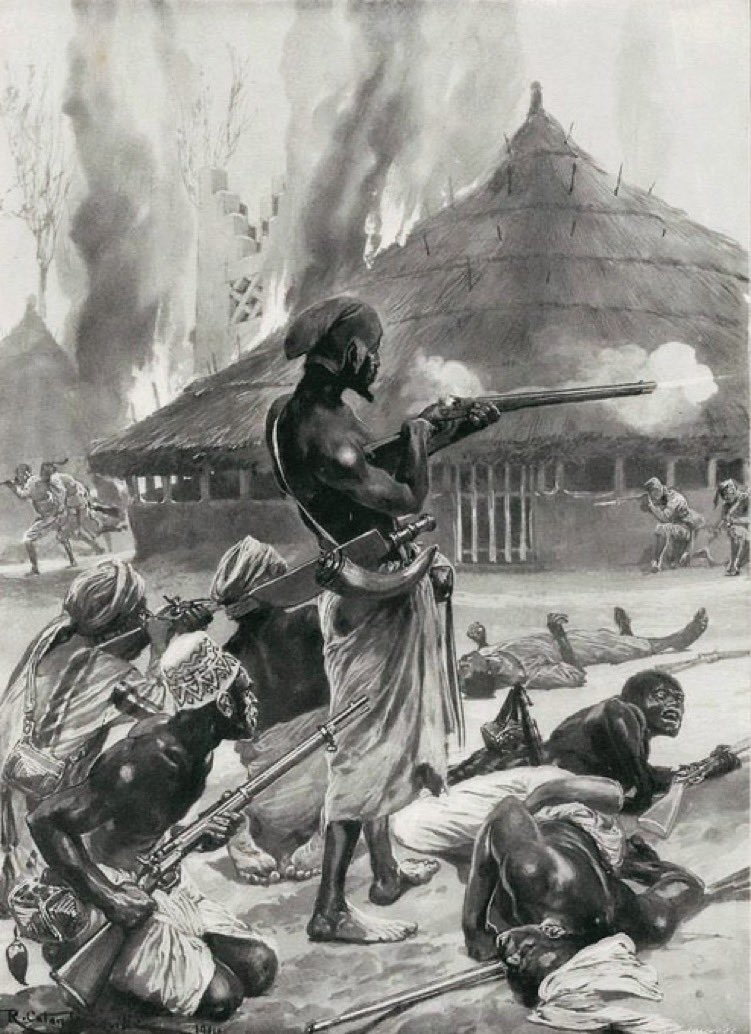
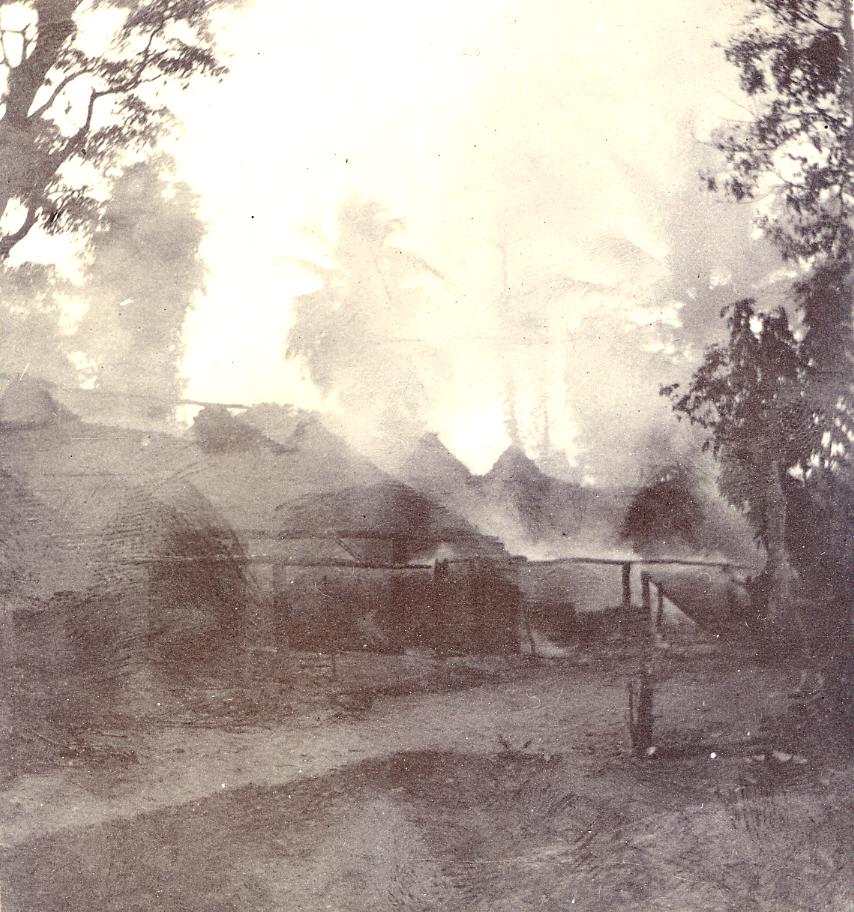
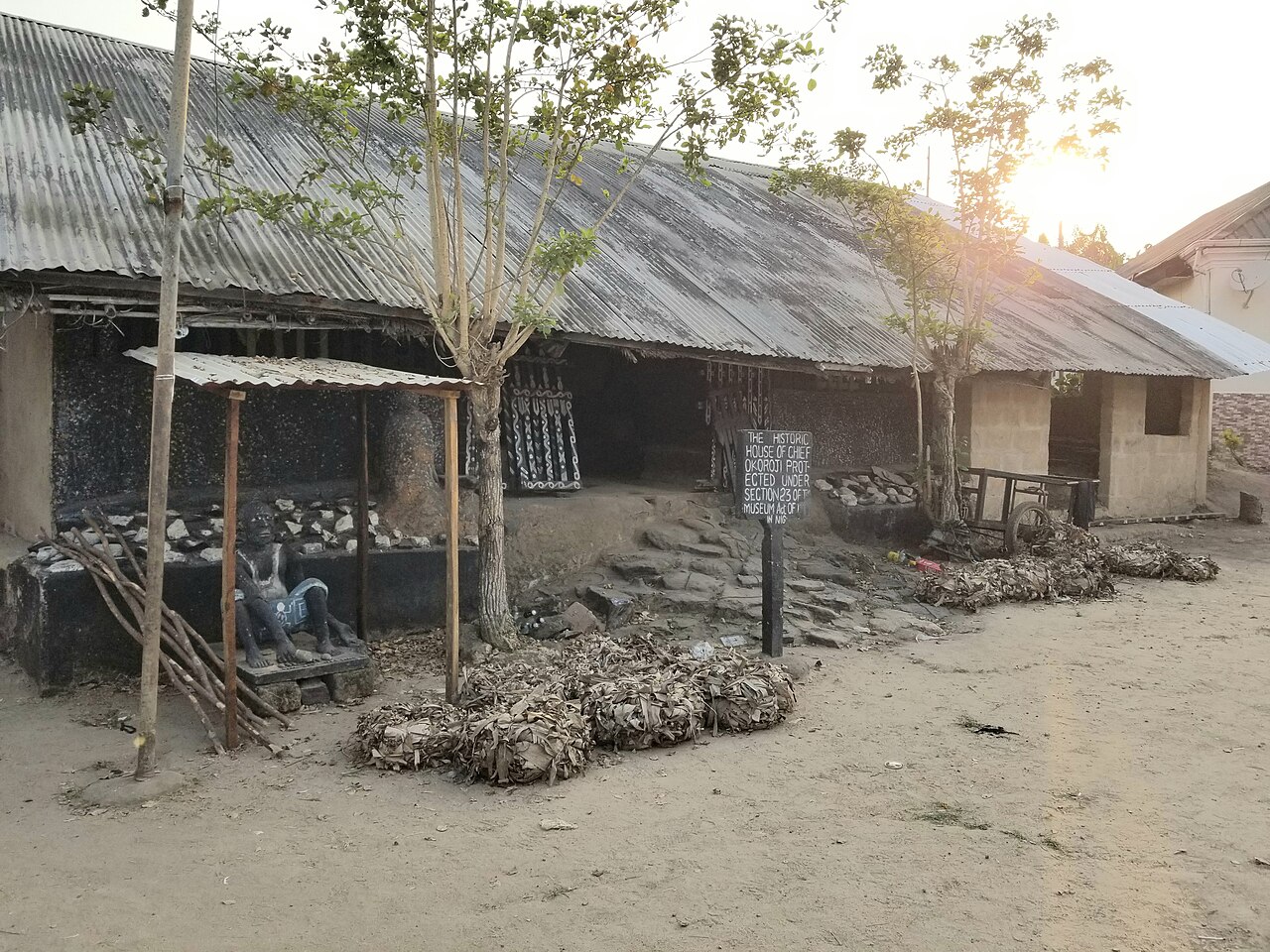
From about the seventeenth century until 1902, the Aro carried trade, oath and the oracle across Igbo land and down the Cross River to the sea. The Aro Confederacy was not a state with borders: it was Arochukwu at the centre and settlements planted among host communities across the region, joined by trade, by marriage and by Ibini Ukpabi, the oracle whose verdict was final. It was also a slave-trading network, and the priests of the oracle were accused of manufacturing verdicts to procure people for sale. In November 1901 a British force of about 1,637 marched against Arochukwu, and by March 1902 the town had been taken and burned. A photograph taken in the last days of December 1901, held today by the British Museum, shows Arochukwu burning. Beside it in this gallery stands Chief Okoroji's house at Ujari, and the illustrated press's own 1901 picture of the expedition. Photographs, via Wikimedia Commons: The 1901 illustrated-press view of the expedition against the Aros - Richard Caton Woodville II, CC BY-SA 4.0. Arochukwu burning, December 1901 - Donald A MacAlister, Public domain. Chief Okoroji's house at Ujari, Arochukwu - Goodymeraj, CC BY-SA 4.0. Licences: https://creativecommons.org/licenses/by-sa/4.0/
Its address is /culture/the-aro-confederacy on www.buzzbuntu.com.