
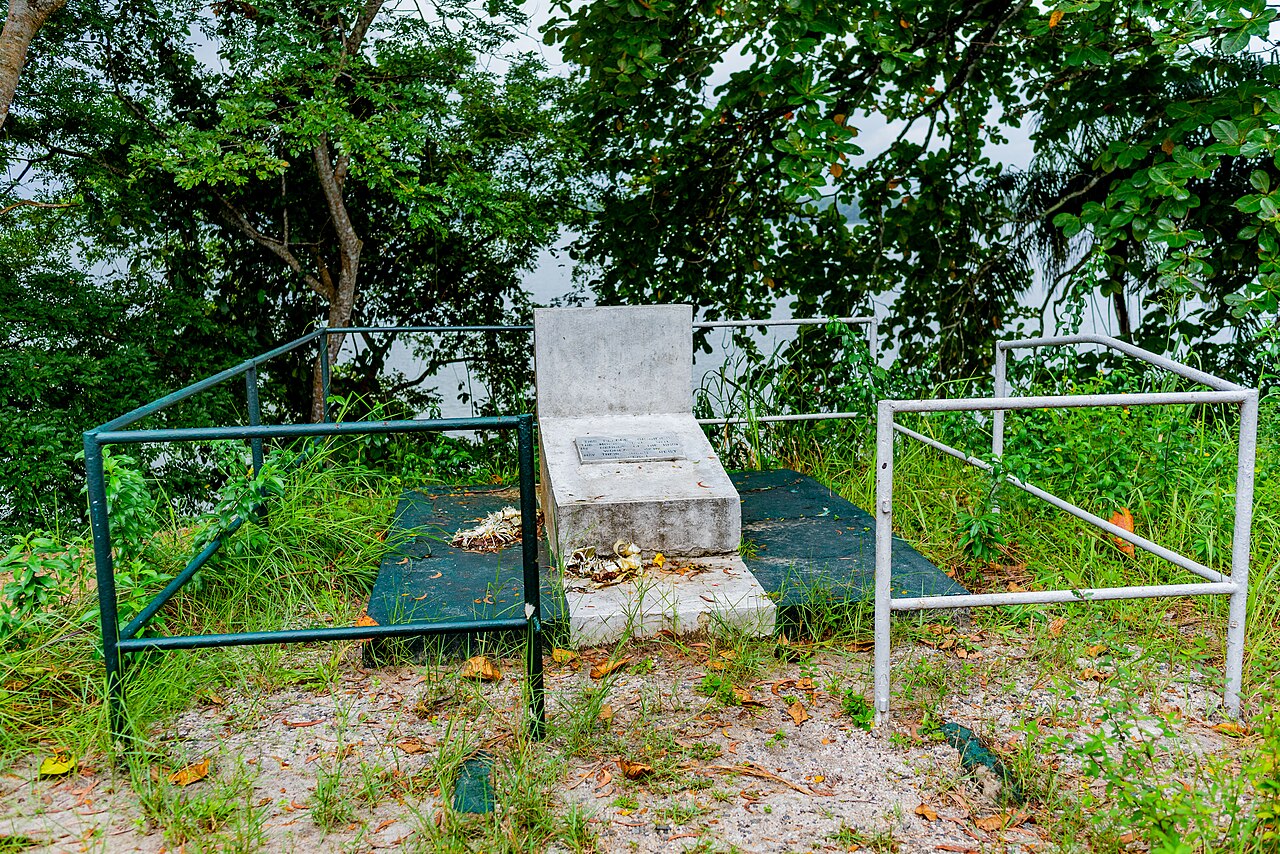
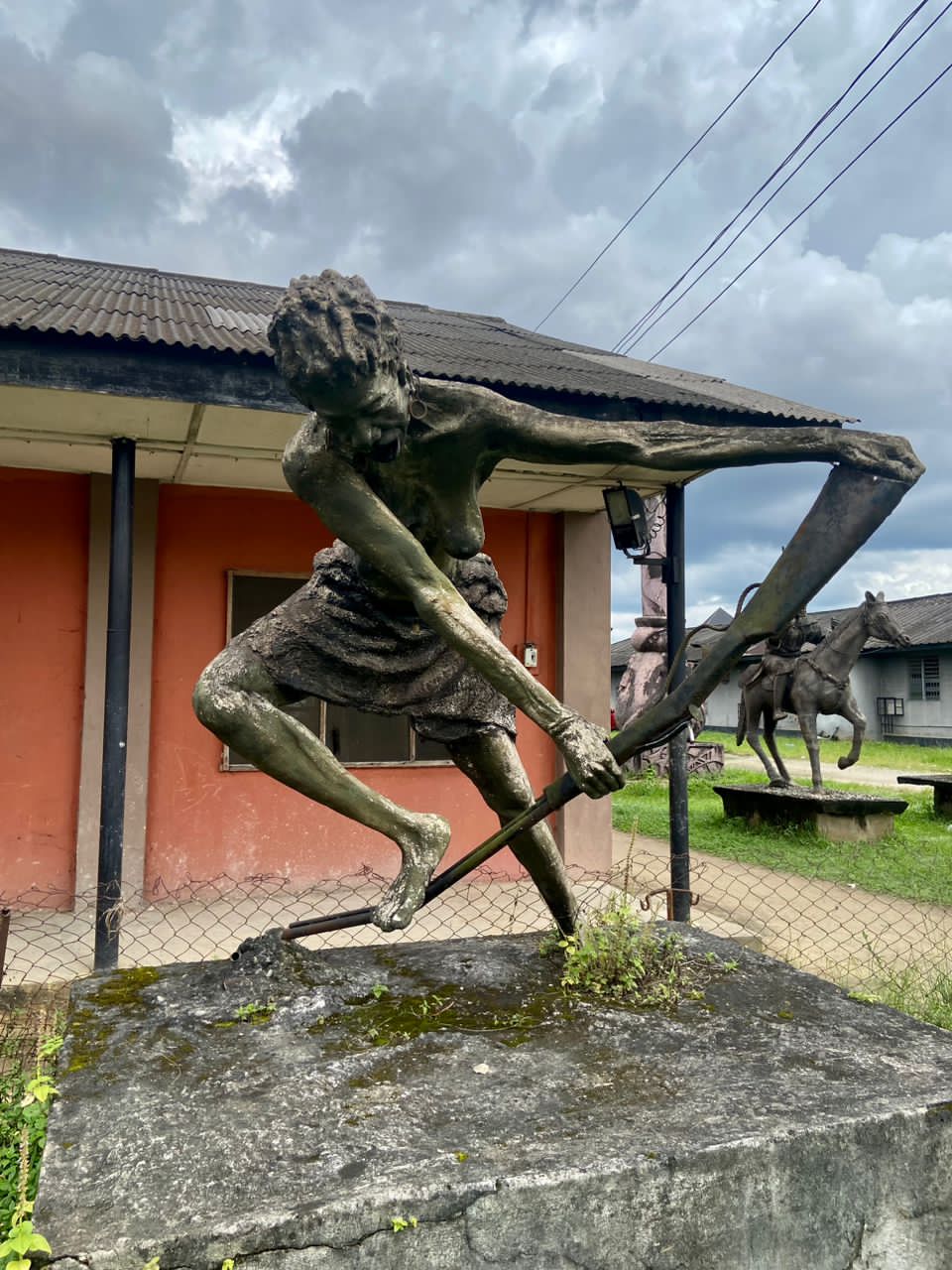
In 1929 the colonial administration began counting women in the Bende District as a prelude to taxing them, as it had taxed men the year before. The counting at Oloko Native Court began about 14 October. What followed is Ogu Umunwanyi - Ekong Iban in Ibibio and Annang, the Women's War to the British - which ran from November 1929 to January 1930, drew some ten thousand women, and killed fifty-five of them. Its methods were deliberate and non-violent: sitting on a man's compound, singing, dancing, demanding the end of the warrant chiefs and their replacement by clan heads chosen by Nigerians. Its leaders were Nwanyeruwa and the three women known as the Oloko Trio - Ikonnia, Nwannedia and Nwugo. In March 1930 the Aba Commission of Inquiry sat for thirty-eight days across the Owerri and Calabar Provinces; Mary Okezie filed the only memorandum from a woman and later founded the Ngwa Women's Association. Women were appointed to the Native Courts afterwards. That year is the founding event of Nigerian women's political history, and it happened here. Photographs, via Wikimedia Commons: The mock grave of the 1929 Women's War - Dappa Solomon, CC BY-SA 4.0. A sculptural representation of the Women's War - Harriwillz, CC BY-SA 4.0. Licences: https://creativecommons.org/licenses/by-sa/4.0/
Its address is /culture/the-womens-war on www.buzzbuntu.com.