
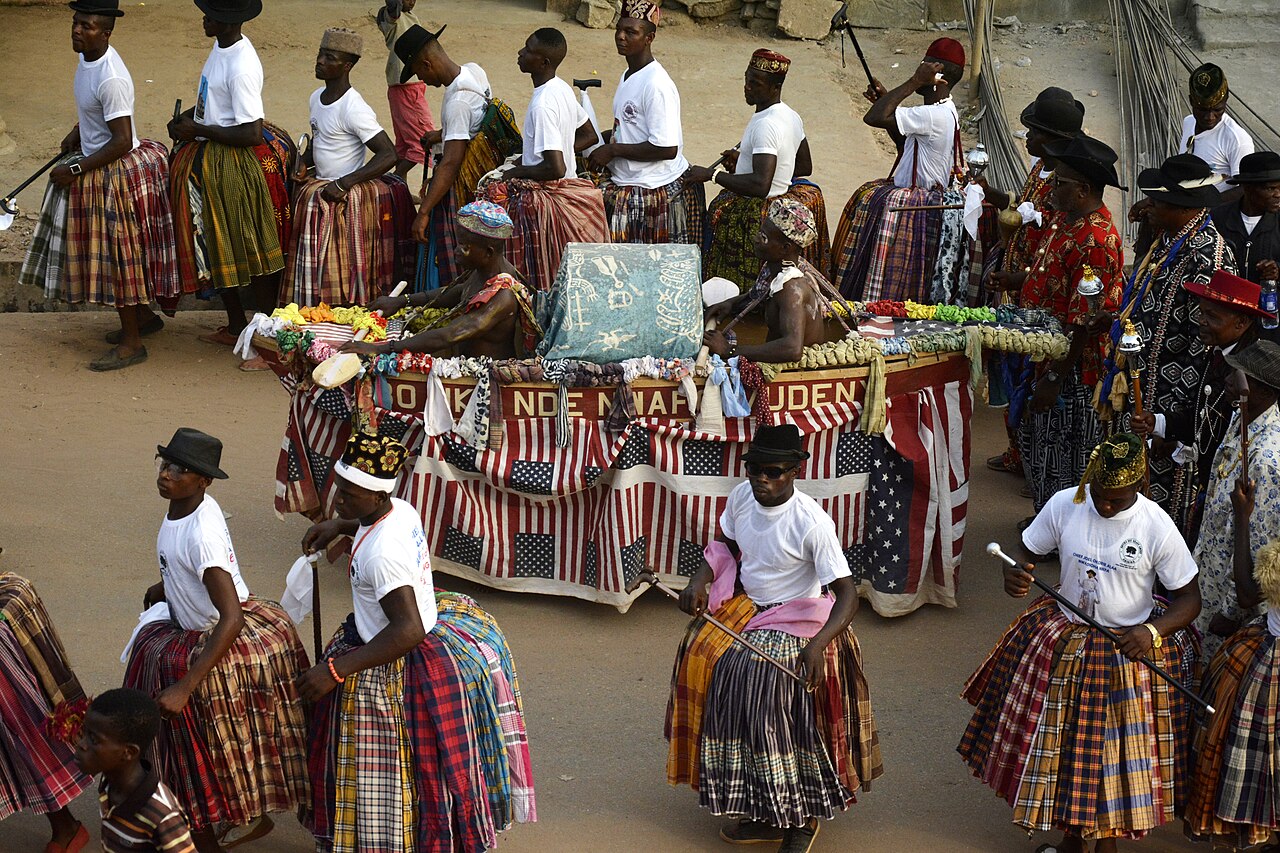
Ohafia is a country of twenty-six villages in Abia's north-eastern highlands, with its headquarters at Ebem Ohafia, and its own account begins with warriors: the men were renowned as fighters, they wear the knitted warrior's cap, the Okpu agu, and their war dance, Ikpirikpi Ogu, is danced by age grades today at funerals, festivals and homecomings. The photographs in this gallery are of that dance and of the Obu house, the traditional meeting house, which is a Nigerian cultural heritage object. The nineteenth-century and early colonial record describes Ohafia and Abiriba as organised, mobile warrior and trading communities, and the tradition of head-taking belongs to that period. It is a difficult history and it is written here as history, with the care it deserves, rather than as spectacle. Abiriba, inside the same local government, is the Enuda kingdom and has its own entry; the Ukpo festival kept by Ndi Nko at Nkporo has its own entry too. Photographs, via Wikimedia Commons: The Obu house at Ohafia - National Commission for Museums and Monuments, CC BY-SA 4.0. The Ohafia war dance - Chinanzagracy, CC BY-SA 4.0. The war dance, Ikpirikpi Ogu - Bibiire1, CC BY-SA 4.0. War dancers of Ohafia - Ekaychee, CC BY-SA 4.0. A lead war dancer carrying the Oyaya - TopmanJnr1, CC BY-SA 4.0. The Ite-Igbo dance at Ebem, Ohafia - AID Project, CC BY-SA 4.0. Licences: https://creativecommons.org/licenses/by-sa/4.0/
What to see
- 1
The Obu house
The traditional meeting house, held as a Nigerian cultural heritage object.
- 2
Ikpirikpi Ogu, the war dance
The dance that turns the warrior tradition into an occasion, performed by age grades at funerals, festivals and homecomings.
- 3
Ebem Ohafia
The headquarters town of the local government, and the centre of the Ohafia country.
- 4
The Ite-Igbo dance at Ebem
The dance performed by the Ohafia war dance group at Ebem, photographed on 16 August 2022.
- 5
The Okpu agu
The knitted leopard cap that the warrior tradition wears, and the emblem the community is known by.
Culture around this place
Stories, heritage and traditions connected to Ohafia and the warrior country and its region.
Nearby places
Continue through the same region and build a fuller visit.
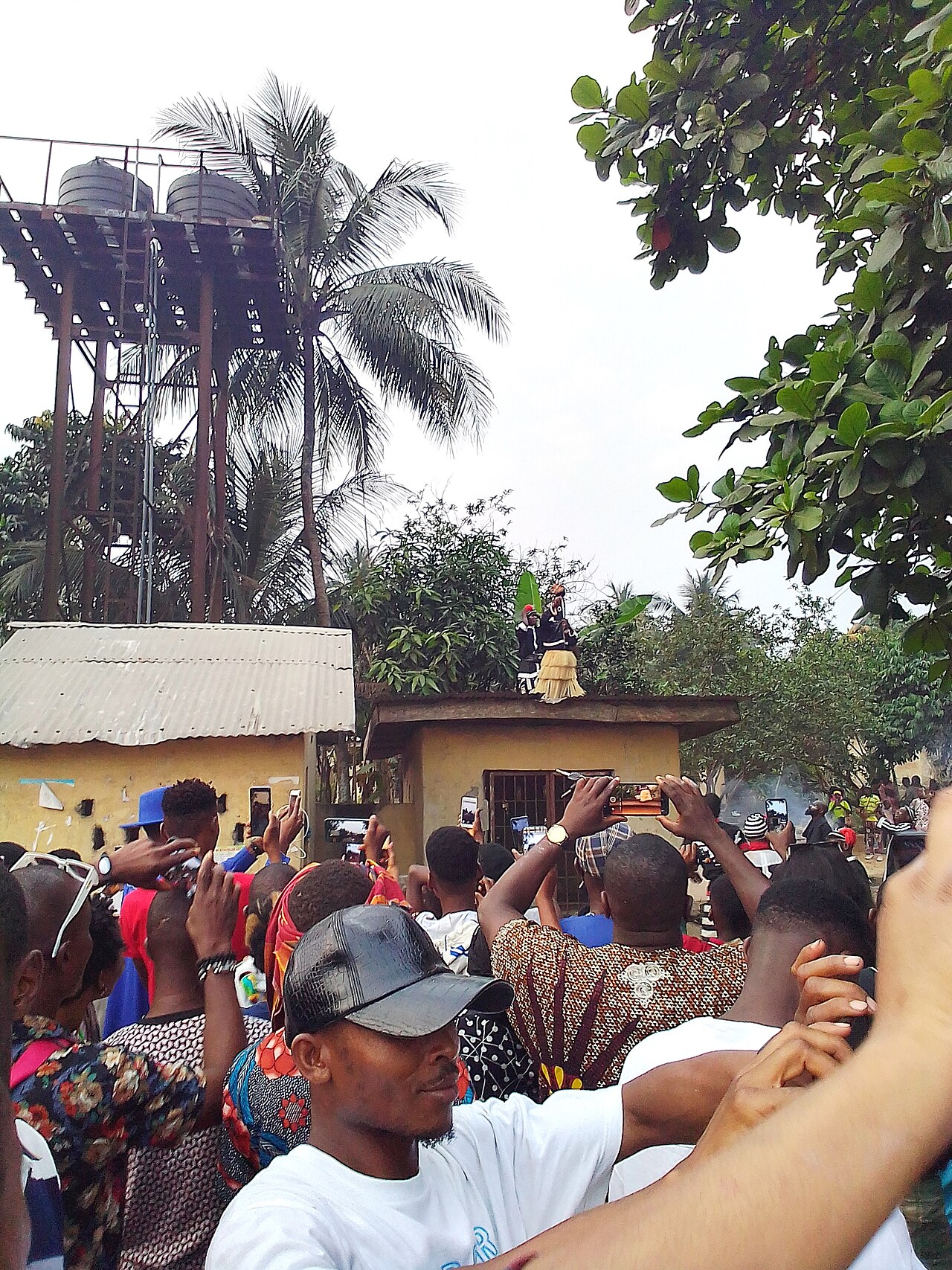 FestivalsAkirikaThe Nwaotam festival at AkirikaThe Nwaotam festival at Akirika, in Ukwa East, is kept on the first of January, and the photograph in this gallery is of a crowd at the celebration. Ukwa East calls itself Eastern Oil Land, its people are the Ndoki, and its best-known things are water and cloth - the Azumini Blue River and Akwete cloth, which have their own entries beside this one. The community's own account of Nwaotam, what it marks and who keeps it, is the source this entry is waiting for. Photographs, via Wikimedia Commons: A crowd at the Nwaotam festival, Akirika - Dalli Gozie K., CC BY-SA 4.0. Licences: https://creativecommons.org/licenses/by-sa/4.0/
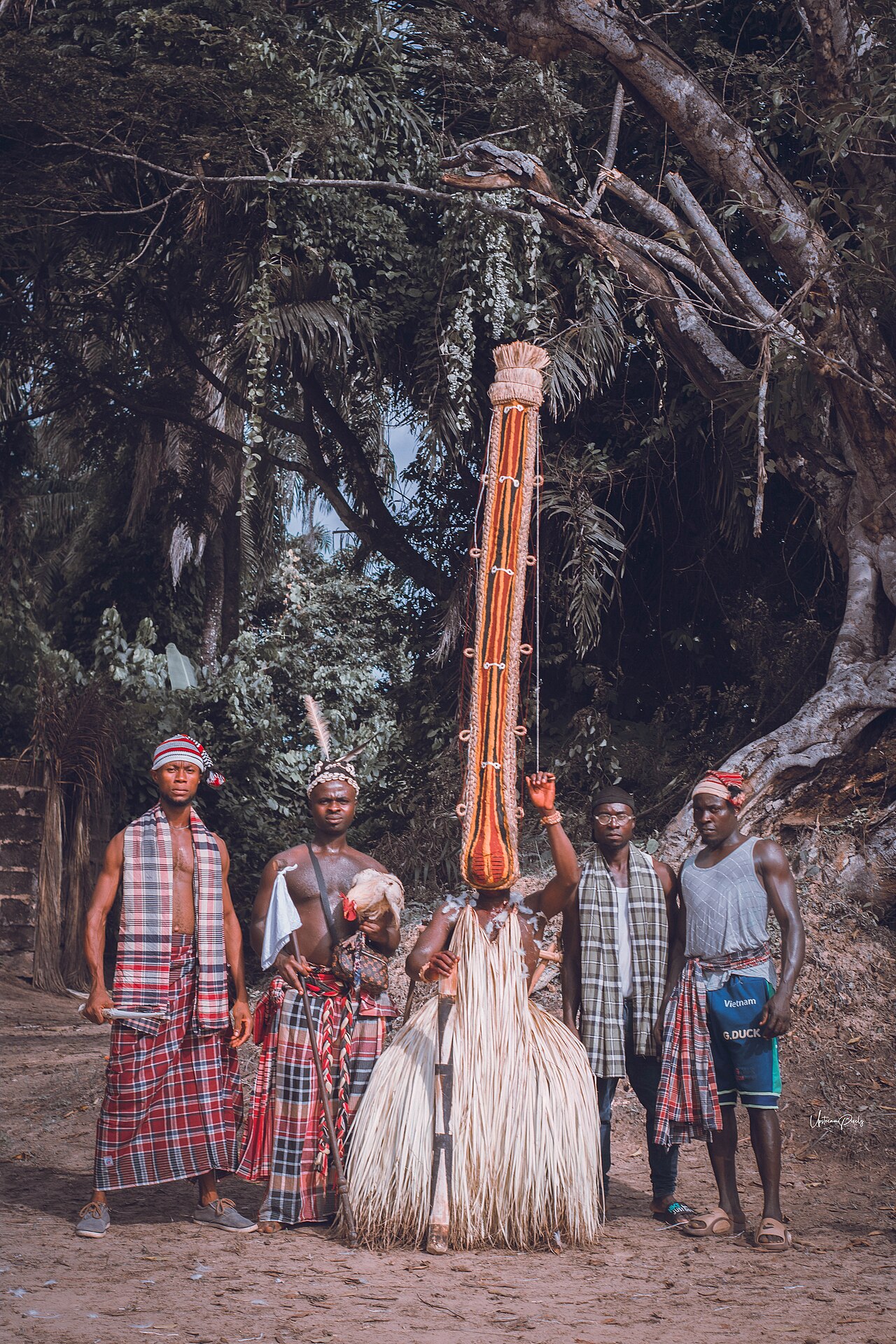 FestivalsNkporoThe Ukpo festival at NkporoUkpo is kept by Ndi Nko, Nkporo, in the Ohafia local government area, and on 4 October 2025 the community held it; the photographs in this gallery are of that day. This entry is deliberately short. Nkporo's own account of what Ukpo is, who may keep it and what it obliges is the entry's proper source, and it is still to be written here. What the platform can say now is what it has: the community, the place and the date. Photographs, via Wikimedia Commons: The Ukpo festival at Nkporo, Ohafia, 2025 - Eskimo2.0, CC BY-SA 4.0 (photograph 1 in this gallery). The Ukpo festival at Nkporo, Ohafia, 2025 - Eskimo2.0, CC BY-SA 4.0 (photograph 2 in this gallery). Licences: https://creativecommons.org/licenses/by-sa/4.0/
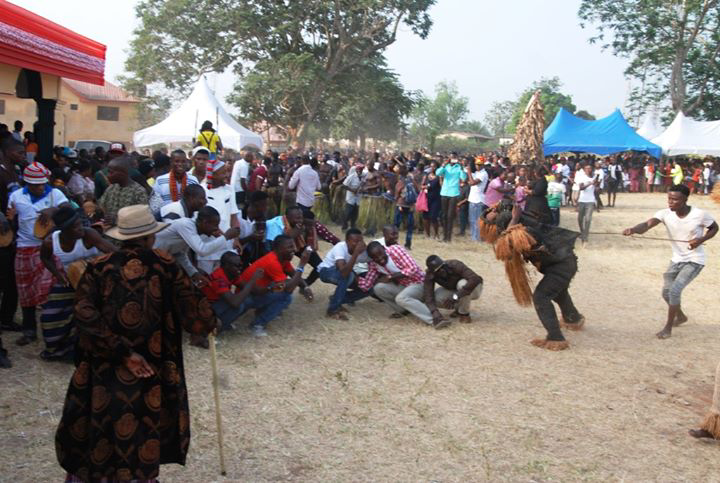 HeritageBendeBendeBende is the middle belt of Abia and one of the state's two colonial divisions: Ndi Bende, the people of the old Bende Division of the Owerri Province, whose towns include Bende itself, Item, Igbere, Alayi, Ozuitem and Uzuakoli. The division's courts, schools and mission stations made it one of the most recorded parts of the present state. Alayi is known for pottery, a women's craft of a very old kind; Uzuakoli carries the memory of the Methodist mission's leprosy settlement and research centre and the college that grew beside it; and the 1929 tax protest that became the Women's War began inside the division, at Oloko. The masquerade and the festival year are kept as they are across Igbo land, with Iri ji, age grades and wrestling, and the photographs in this gallery are from a Bende cultural festival. Photographs, via Wikimedia Commons: A masquerade at a Bende cultural festival - Peddykal, CC BY-SA 4.0. A chief in Bende - Peddykal, CC BY-SA 4.0. Licences: https://creativecommons.org/licenses/by-sa/4.0/
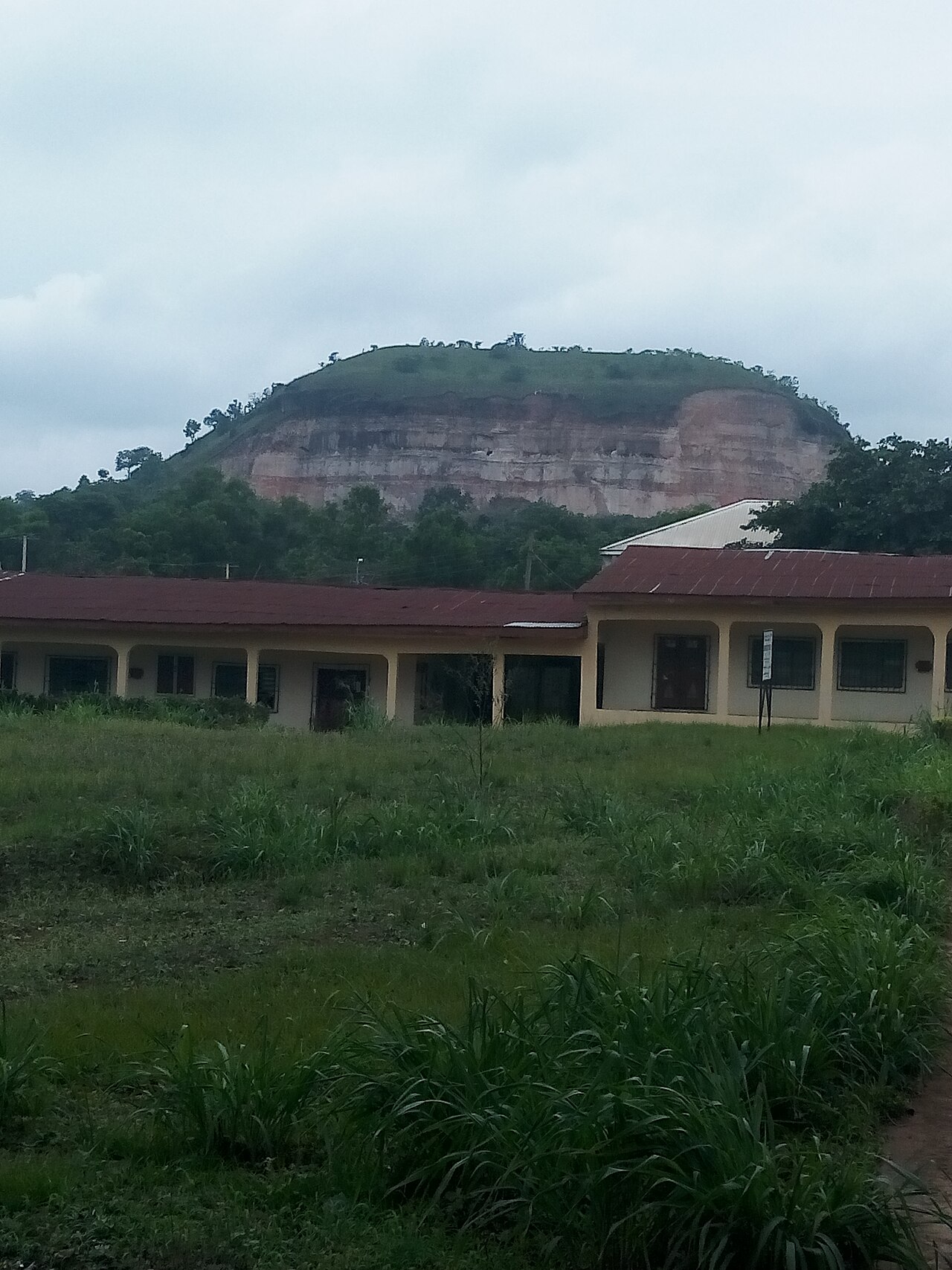 AdventureUturuUturu and the Isuikwuato hillsIsuikwuato is the cool upland country of Abia's north-west, on the road to Enugu, and its communities include Uturu, Umuobiala and their villages. Abia State University's main campus stands at Uturu, and the photograph in this gallery is of the hills above it. The people's own tradition places them in the Isu stock of Igbo groups, a claim of common descent with communities far beyond the state rather than a dated record, and the land around them is upland farm and quarry country: cassava, yam and palm on the slopes. There is a waterfall on the hills, recorded in the culture entry for Isuikwuato and the Isu; the community's account of where it is and how it is reached is not yet in this record, and the platform does not guess a route. Photographs, via Wikimedia Commons: The hills above Abia State University, Uturu - MaziIwu, CC BY-SA 4.0. Licences: https://creativecommons.org/licenses/by-sa/4.0/
Its address is /tourism/ohafia on www.buzzbuntu.com.